Watch This Newsletter
End of Hay Season — Finally
Well, it’s been a while since I’ve put out a newsletter, and we’ve had our hands full. Hay season is finally wrapped up, and if you’ve watched our latest YouTube video, you already know it’s been a grind. Today I want to give you a look behind the scenes and share what the last few months have really looked like out here.
Before I jump in—if you’re new here, I’m Connor McCauley. I write these from my own perspective as someone who didn’t grow up in ranching but has spent the last five straight years learning this life the hard way. At this point, I’m not sure if that still makes me a “beginner.” You can decide if five years earns me the “intermediate rancher” badge. Either way, I’m still learning, still making mistakes, and still showing up every day.
Let’s get into it.
Six Months of Hay, Start to Finish
You can follow the whole hay timeline over on YouTube, but here’s the short version:
-
Six months ago — We planted the crop.
-
Three months ago — First baling video went up.
-
Two months ago — Another baling video, but this time square bales.
-
Two weeks ago — The final piece of the puzzle: moving hundreds of round bales.
If you haven’t watched that last video yet, do it. It’ll make everything below click.
One Man vs. 400 Round Bales
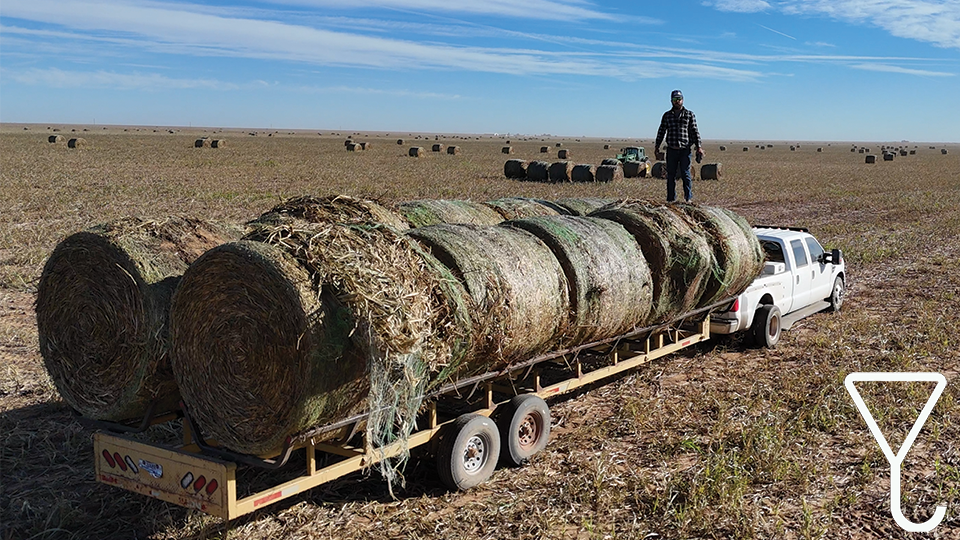
Compared to last year, we had a better trailer setup—but only because we borrowed it. Last year we used a seven-bale trailer with individual levers for every bale. Miserable to unload. I hope I never touch that thing again.
This year, we borrowed a ten-bale trailer with a single jack that drops all ten bales at once. That alone cut hours off the job, especially since these bales were way out in the far field.

In total, we moved around 400 round bales, most of them weighing right around a thousand pounds. Sam stored them with the skid steer, but the hauling? That was a full week of one man, one tractor, one trailer, and a lot of patience.
Picture this: you’re alone in the field at sunrise. It’s dead quiet except for the tractor warming up. You load a bale… haul it to the staging area… drop it… turn around… and do it again. Twenty minutes a load. All day. Over and over. That’s ranching—long days, busted knuckles, and no shortcuts.
When Equipment Breaks (Because It Always Does)
About the time things were running smoothly, the forks on the front of the tractor decided they’d had enough. They were already old, rusty, cracked, and hanging on by attitude alone. One of the mounting plates finally snapped, and the whole fork assembly partially dropped.
So now you’ve got two choices:
-
Go spend money you don’t want to spend on new forks, or
-
Do what ranchers do and fix the thing.
We chose option two.
We drove the tractor back to the shop, pulled the broken plate off, heated it, beat it back into shape, welded it, torched off the bad welds, and rebuilt it stronger. Put it back together and got right back to work. I attached a picture in the newsletter so you can see the mess we were dealing with.

That’s the job. Something breaks, you fix it, and you keep going.
A Bonus Ending — Harvesting Milo at Sunset
Right when we wrapped up the tractor repair, we rolled back out to the field and caught the milo harvest in full swing. Sun going down, combine running, dust kicking up, cattle grazing nearby—it was one of those scenes that reminds you why you put up with all the chaos.

I took the drone up and got some of my favorite footage of the year. It’s all in the YouTube video. If you haven’t subscribed yet, now’s the time.
Why We Share All This
Hay matters. Without it, winter feeding doesn’t happen. Without winter feeding, nothing else works. Every bale moved now means the herd gets through the cold months strong.
And beyond the work itself, we share these stories because TriTails isn’t just a product on a website. It’s our family’s legacy. It’s generations doing whatever it takes to raise good cattle and put real beef on American tables.

If you’ve never ordered from us before, give our beef a try. Cook it on your own grill or stovetop and you’ll understand exactly why we pour this much sweat into what we do.
Thanks for reading, and thanks for being part of this journey with us.
— Connor


Leave a comment
All comments are moderated before being published.
This site is protected by hCaptcha and the hCaptcha Privacy Policy and Terms of Service apply.