Hello and welcome to this week’s Cowboy Corner.
My name is Connor McCauley, and I write these newsletters from a unique perspective — someone who’s still relatively new to ranching.
If you’ve never been part of this world either, then you and I have something in common. A lot of what you’re reading here are things I’m experiencing for the first time myself. The goal of these newsletters is simple: to bring you into this life the same way I was brought into it.
After a more reflective newsletter a couple weeks ago, we’re back to business as usual.
We also just released a new YouTube video — and I’ll say this honestly — I think it’s one of the best we’ve done. Real cowboys, real country, real work. If you get the chance after reading, click over and watch it. Subscribing, liking, and watching the videos helps us more than you know.
Only about 2% of Americans are involved in raising food anymore. Most folks are far removed from it. So when you follow along — even if you never buy a single thing from us — it still matters.
Alright, let’s get into this week’s story.

Working Roads & Getting Ready for Winter
This week’s story actually starts with a project still in progress: working roads down in the canyon.
That job had already been delayed — and then our dozer developed a hydraulic leak.
So that’s where we begin.
Sam, Aaron, and I were down in the canyon fixing roads and fences, preparing to move cattle down for the winter.
The canyon is one of the best places we have to winter cattle. The walls block the wind, which is far more dangerous to cattle than cold itself. You’ll find cattle in brutal cold up north — but wind is what causes frostbite on ears and tails.
Shelter makes all the difference.
In the right conditions, the canyon can even be warmer than the ground up top. That’s why cattle have been wintered down there for generations — long before this ranch was established.
This year, though, has been different.
We’ve had a mild winter — temperatures in the 60s and 70s most days, with only a couple real cold spells. Because of that, we didn’t move all the cattle down. Some stayed up top, and that’s been just fine.
But back to the dozer.

We were finishing a creek crossing when we noticed the hydraulic leak. Once we shut it down, we realized we were stuck — and already late moving cattle.
So we made the call: move them anyway.
The roads weren’t completely finished, but we had enough access. We could still get feed in if needed — though the grass down there is amazing, even in its dormant state.
It may look brown in the videos, but that’s winter grass — dormant, not dead. That canyon has supported cattle for over a century for a reason.
The Drive — Day One
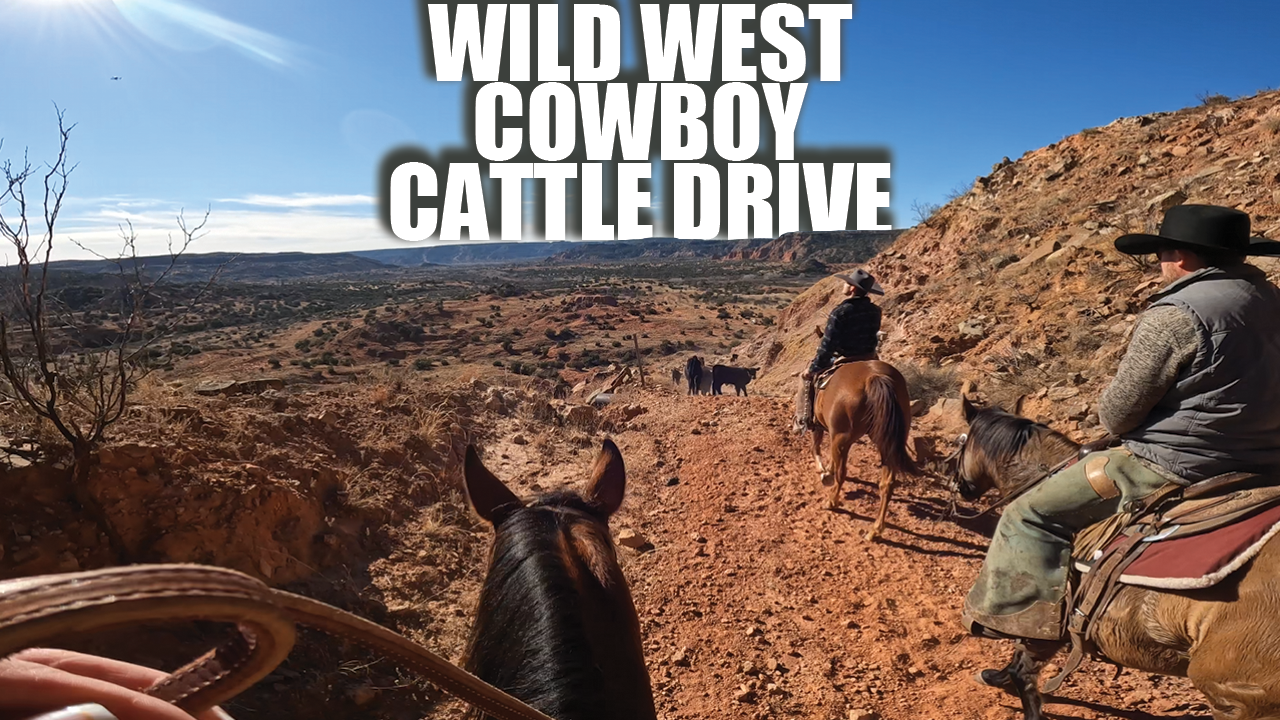
Moving cattle down took two days.
Day One started near Bull Trail on the northwest side.
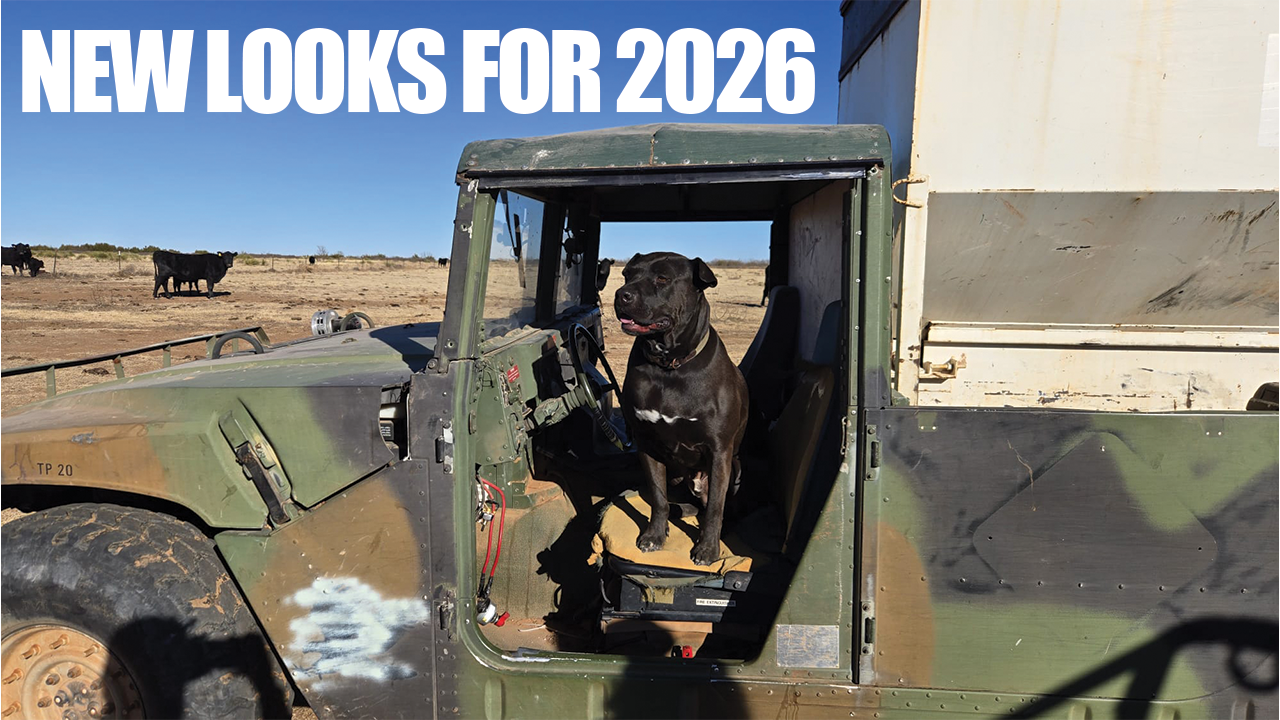
Sam drove the feed Hummer into the pasture and sounded the siren. The cattle associate that sound with feed, so they began gathering around him.
From there, the cowboys spread out, circled the herd, and started pushing them toward the road.
The Hummer led from the front with feed. Cowboys worked from behind, guiding and applying pressure where needed.
The road along the canyon edge is something to see — several hundred feet straight down on one side. Beautiful, but it’ll get your attention.
Eventually we reached the gate and began pushing the herd down the steep switchback trail into the canyon.

When It Got Western
Halfway down, things got interesting.
One calf suddenly bolted up the rocky slope above the trail.
It wasn’t a cliff — but steep enough to cause problems.
Aaron went after it on horseback — because the moment one calf goes, others follow. Sure enough, more started scrambling up the slope.
He had to maneuver his horse across loose rock on the canyon edge to turn them back. It was tense, but he got control of it.
After that, the calves were wound up — running, scattering, causing a little chaos.
Sam even flew the drone in to help pressure them back down.
Between horses, boots, and a drone — we got them settled and pushed safely to the canyon floor.
One added challenge this year: because the move happened later than usual, some young calves were still traveling with their mothers.
But by the end of the day, everyone was down safe.

Part Two Ahead
Day Two was just as eventful — maybe more so.
The trail was so rough we couldn’t even take the Hummer down.
I’m planning a video around that drive as well, so we’ll save the full story.
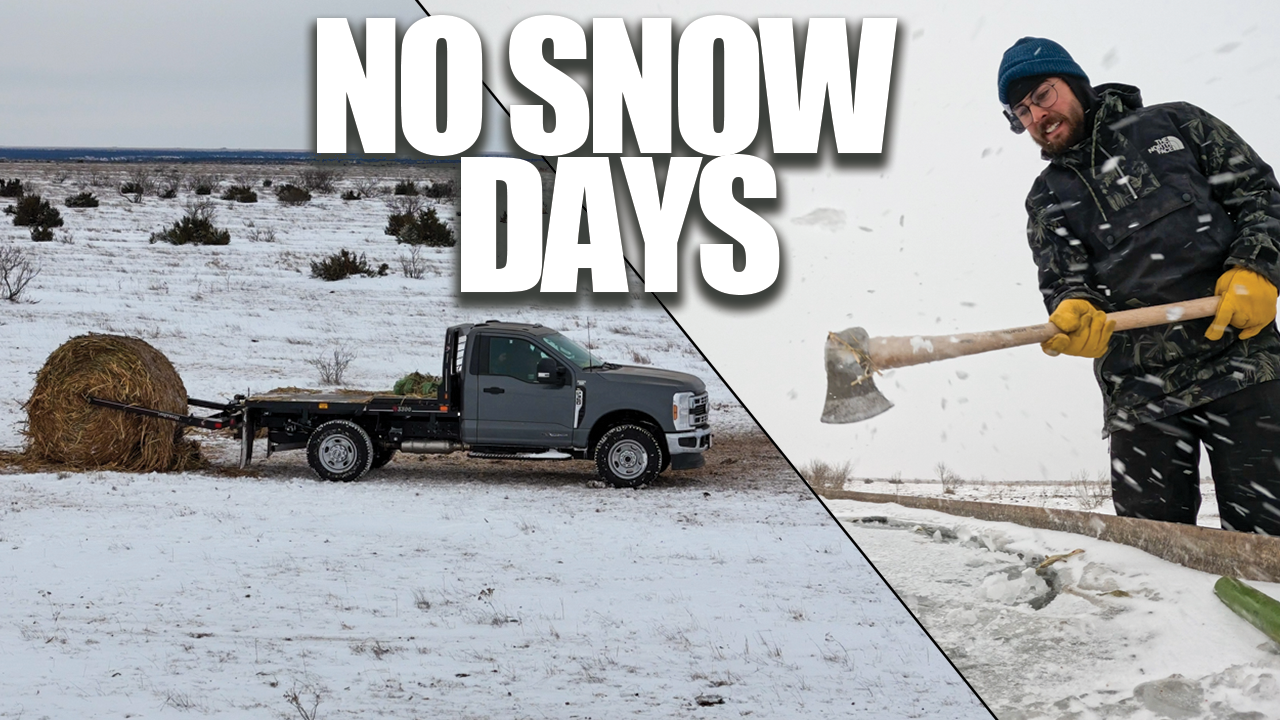
Next week’s newsletter will cover the snowstorm — and then we’ll follow that with Wild West Cattle Drive: Part Two.
Closing Thoughts
I always like to end these newsletters the same way — simple and honest.
We’re not a corporation.
We’re a family ranch.
Most days it’s just the six of us — plus one little baby — doing the work.
So when I say thank you, I mean it.
We don’t just want customers — we want people connected to this world. Because this is where your food comes from.
All beef starts with a rancher somewhere.
And we believe deeply in the legacy behind that — generational knowledge passed down through years of hands-on work. The kind of knowledge you don’t learn in a classroom.
It’s learned beside parents and grandparents — the same way Sam passed it down to Faith and Helen.
That legacy matters.
Not just ours — yours too.
The values you pass down. The direction you point the next generation.
We know families aren’t perfect. Ours isn’t either. But every generation has the chance to do a little better than the last.
That’s something we believe strongly in — alongside our faith, which guides much of what we do.
So whether you’ve bought beef from us or simply read these newsletters and watched the videos — thank you for being here.
You’re always welcome along for the ride.
I’ll see you in the next one.

Leave a comment
All comments are moderated before being published.
This site is protected by hCaptcha and the hCaptcha Privacy Policy and Terms of Service apply.