A Little Chaos, A Lot of Cattle, and Preserving the Cowboy Way
All right, folks, we're back! A brand-new day out here on the Harrell Ranch, and man, has it been a busy few weeks.
Now, if you've been following these newsletters, our vlogs, or anything in between, you probably know that our content tends to run a little behind real life. We've explained that a time or two in our videos, but I bring it up because, well, we're a little further behind than usual. The sheer amount of work we've had going on lately has made it tough to keep up!
But I will tell you this: as I'm sitting here writing this newsletter, we've just come out of a pretty good stretch of rain. I'm sure you've heard about some of the weather moving across America, and here in the Texas Panhandle, we've certainly gotten our fair share. We had several good days of rain last week, followed by another decent soaking these past few days.
And while rain can certainly slow things down on the ranch, sometimes that's not such a bad thing. It's given us a chance to catch up on some odd jobs, chores around the house, and all those little things that tend to get pushed aside when cattle work takes priority.
Things did get a little wild last night, though. We actually had a few tornadoes touch down here in the Panhandle! I haven't seen much on the news yet about what kind of damage they caused, which I'm hoping is a good sign, but I really don't know as of writing this. In my six years of living here, this was actually my first time seeing tornadoes touch down in the Texas Panhandle. Pretty intense stuff!
But I digress.
For those of you who might be new around here, I'm Connor McCauley, and I've got a couple of fellow partners in crime helping me bring all this to you. We've got Tracey helping with our videos, and my wife, Helen, who handles a tremendous amount of the business side of TriTails.
And don't let me calling them sidekicks fool you. They've got plenty of their own responsibilities, and quite frankly, we all wear more hats around here than we probably should!
These newsletters are our way of bringing you along for a little taste of what ranching looks like out here in the Texas Panhandle. A little Wild West, a lot of cowboys, cattle, farming, and just about everything in between.
So, with that said, let's get into this week's adventure.
Gathering Heifers, Bucking Horses, and a Rough Start
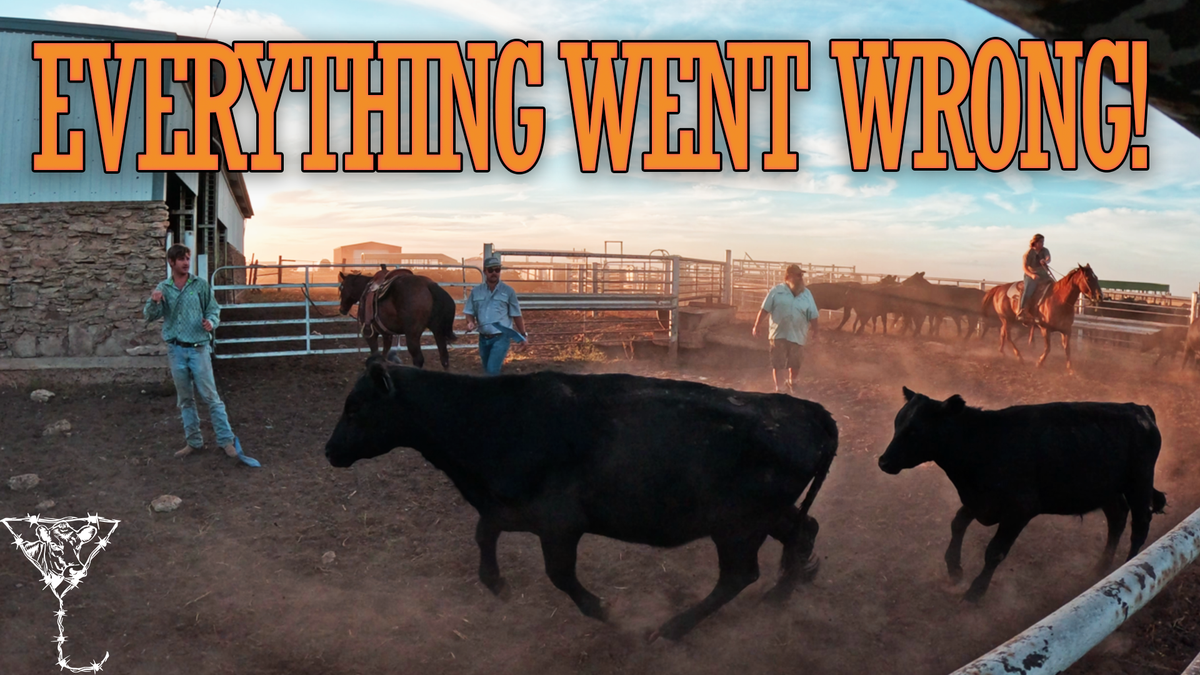
This week, we're taking you along as we gather a large group of our heifers, sort them off, and push them up to the flats in preparation for shipping them off to sale.
And let me tell you, this one was anything but smooth sailing.
Our morning started with the crew horseback, gathering cattle and working them toward the pens. Pretty standard stuff, right?
Well, that didn't last long.
While Aaron was out gathering, his horse decided it was a fine time to put on a little rodeo. He bucked HARD, throwing Aaron off before stumbling into a fence and going down himself.
Not exactly how you want to start your morning.
Thankfully, Aaron was all right, but we had ourselves a bit of a predicament with his horse. We ended up having to get some rope and another horse, wrap the rope around Aaron's horse, secure it to the horn of the other horse's saddle, and pull him back up onto his feet.
Thankfully, Darling (Aaron's horse) came out of the ordeal just fine.
And Aaron? Well, he decided to climb right back into the saddle.
I think both horse and rider were a little shaken up, but there was still work to be done, and sometimes you've just got to dust yourself off and keep moving.
Unfortunately, Aaron wasn't the only one having a rough morning.
Faith also managed to get her leg pinned between two horses. She was able to walk it off and continued working throughout the day, but I'm sure she was feeling that one for a while.
Needless to say, we were off to a GREAT start. Haha!
The Long Push to the Flats
Once we'd gotten through the morning's excitement, it was time to push those heifers up to the flats.
And this, my friends, turned into an absolute nightmare.
If you've watched our cattle-working videos before, you've probably noticed that we often use a feed truck to lead the herd when moving cattle across longer distances.
The truck drives out front, dropping a little feed at a time, and the cattle naturally follow along. Meanwhile, the cowboys work behind and along the flanks of the herd, keeping the cattle together, preventing them from spreading out, and encouraging the stragglers to keep moving forward.
It's a pretty good system.
Well, usually.
On this particular day, we only had two riders working behind the herd: Aaron and myself. Faith and Tracey were up front with the feed truck, leading the cattle along.
Things were moving relatively well until we reached a particularly nice stretch of grass.
Apparently, the heifers decided they'd gone far enough for the day.
They stopped, put their heads down, and started grazing.
And let me tell you, trying to convince a large group of heifers to leave a perfectly good patch of grass when they've decided they're comfortable is no easy task.
Aaron and I were running back and forth, trying to keep them together and get them moving. We pushed, we flanked, we hollered, and those heifers couldn't have cared less.
Eventually, we resorted to cracking a bullwhip, using the loud noise to encourage them to get their heads up and start moving again.
It was a whole lot of work for two guys on horseback, but eventually, we managed to get the entire herd pushed up into the large pasture where our shipping pens are located.
They weren't in the pens just yet, but at least we'd gotten them where they needed to be.
One step closer!
Round Two: Chasing Down the Stragglers
The following morning, we saddled back up and headed out to gather the remaining stragglers.
We had a few heifers scattered around that still needed to be brought up into the shipping pasture, and once we had them together, it was time to gather the main herd and start pushing everything toward the pens.
And wouldn't you know it? We ran into the exact same problem as the day before.
Those heifers wanted to graze!
Once again, we spent a good portion of the morning riding back and forth, trying to keep the herd moving across the pasture.
Meanwhile, Aaron had ridden off into another pasture and headed down into Rush Creek to gather a few more stragglers.
If you've watched some of our previous videos, you might recognize Rush Creek. It's a pretty neat spot on the ranch, and one we've featured a time or two.
While Aaron was down there, Faith and I continued working the main herd, eventually getting all the cattle we had gathered pushed up into the pens.
Once that was taken care of, we headed back out to meet Aaron and help him bring in the last of the stragglers.
Another long day in the saddle, but we were finally getting somewhere!
Shipping Day: Seven Semi-Trucks of Cattle!
By the final day, we were down to the last bit of sorting and loading.
We still had a handful of cows mixed in with the heifers that needed to be separated out, so we worked through the herd, pulling those cows aside while getting everything ready to ship.
And then came the trucks.
Seven cattle haulers, to be exact!
As the trucks were being loaded, we continued sorting cattle and pushing each group up the alley and into the trailers.
This is actually where this week's video really comes into play, and rather than trying to explain every little detail here, I highly recommend heading over and giving it a watch.
You'll get to see the whole operation, from the horseback chaos to the final sorting and loading of the heifers.
And while you're over there, we'd sure appreciate it if you'd give the video a like and subscribe to our YouTube channel if you haven't already.
It genuinely goes a long way toward helping us continue sharing this lifestyle with folks all across the country.
You can find the video linked here in the newsletter!
A Little Something to Think About: Preserving Ranching Culture
Before I wrap this one up, I wanted to leave you with something a little different.
We talk about a lot of things on our channel. Cattle, ranching, farming, the beef industry, and everything that comes with living and working out here. But there's something a little deeper behind all of it that I think is worth talking about.
Culture.
Now, without getting too political, I think we can all look around at the world today and recognize that there's a lot going on when it comes to culture. There always has been, of course, but it certainly feels more prevalent these days, especially here in America.
There's a lot of conversation about preserving certain cultures, celebrating different backgrounds, and respecting the traditions that have shaped communities over generations.
And I think that's a beautiful thing.
But sometimes I wonder why the culture of Southern ranching, farming, and the American cowboy doesn't always seem to receive that same appreciation.
It can be easy for people to look at this way of life and immediately define it by a political affiliation, conservative values, or certain aspects of America's past. Sometimes ranchers and cowboys get painted with a pretty broad brush, and not always a flattering one.
But there's so much more to this culture than that.
We're talking about a way of life rooted in the land. A culture built by generations of hardworking men and women who have spent the better part of 250 years helping feed this country.
And that's something worth being proud of.
It's also a culture with a rich and diverse history. The American cowboy didn't simply appear out of thin air. So much of what we know as cowboy culture today was shaped by Spanish and Mexican vaqueros. From horsemanship and cattle-working techniques to the very equipment we use, their influence is woven into the fabric of Western life.
And I think that's worth recognizing, appreciating, and preserving.
The cowboy way isn't just about wearing a hat, riding a horse, or holding a particular set of political beliefs.
It's about the land, the livestock, the people, and the traditions passed down from one generation to the next. It's about hard work, responsibility, perseverance, and taking pride in what you do.
And frankly, I don't think we should be so quick to dismiss or look down on the people who continue to carry those traditions forward.
After all, insulting the hand that helps feed America probably isn't the smartest move. Haha!
And that brings me back to TriTails.
Yes, we're a beef company. We raise and sell premium American beef, and we're incredibly proud of the product we offer.
But we're also so much more than that.
Part of what we're trying to do through these newsletters and videos is share a culture and a way of life that we believe deserves to be preserved.
We want folks to see the work that goes into raising cattle. We want them to understand where their food comes from, meet the people behind it, and maybe gain a little more appreciation for the ranching families who have been doing this work for generations.
And here's the thing: you don't have to buy our beef to support what we're doing.
We know our beef is a premium product, and we understand that not everybody is in a position to purchase it. That's perfectly all right.
If you want to support us by purchasing our beef, we certainly appreciate it. But you can also support us by watching our videos, subscribing to our YouTube channel, sharing our content with a friend, or simply following along with what we're doing out here.
Every bit of that helps us continue telling these stories and sharing this little corner of the American West with the world.
And for that, we appreciate y'all more than you know.
So, I'll leave you with that for this week.
God bless, thank you for following along, and we'll see y'all in the next one!
— Connor & the TriTails Crew

Leave a comment
All comments are moderated before being published.
This site is protected by hCaptcha and the hCaptcha Privacy Policy and Terms of Service apply.