Before we get into this week’s story, I’ve got to say—there are a couple of finish lines finally coming into view.
First, Helen and I are wrapping up the move out to the ranch and selling our place in town. It’s been one of those seasons where life is already busy… and then you stack a monster project on top of it. Days feel endless. And when you do get a second to sit down, you’re so worn out it doesn’t even feel like rest. That’s been life lately.
But the end is in sight.
Second—we’re bringing on a new TriTails team member. Her name’s Tracy, and she’ll be joining us toward the end of May. That’s a big deal for us. It means more consistent emails, better timing on content, and a whole lot more room for me to actually keep up with YouTube without feeling like I’m running two full-time jobs at once.
Which brings me to this.
If you’re new here—my name is Connor McCauley. I wasn’t born into this world. I married into it.
I’ve been out west for about 10–12 years now, but ranch life is different. I’ve always loved the outdoors—hiking, skiing, all that—but country living isn’t a weekend trip. It’s a way of life. And it’s one that’s slowly disappearing.
That’s part of why I write these.
This isn’t just about selling beef. It’s about pulling back the curtain on agriculture—showing you the people, the work, and the reality behind it. Because the truth is, agriculture built this country. And if we’re not paying attention, we’re going to wake up one day relying on other countries to feed us.
That’s not a road we want to go down.
So instead—we tell the stories.
This Week’s Story
It starts down in the canyon.
If you know anything about where we are, we’re right up against Palo Duro Canyon State Park. What a lot of people don’t realize is that land used to belong to the Harrell family—what was once called Lighthouse Ranch.
These days, it’s public land. Beautiful, rugged, and not exactly forgiving.

And every once in a while… our cattle remind us of that.
They’ll find a weak spot, push through, and suddenly we’ve got cows wandering into the park. Which leads to some interesting calls—like people thinking they’ve spotted a bear… when it’s just one of ours.
So when that happens, we saddle up.
This time, we hauled a portable corral down with us. The plan was simple—if we couldn’t push the cattle all the way back, we’d load them and trailer them out.
We’ve got permission to use drones in the park strictly for finding cattle. That’s it. No filming, no content—just work. So we located them first, and sure enough, there they were, pushed back deep toward our side.
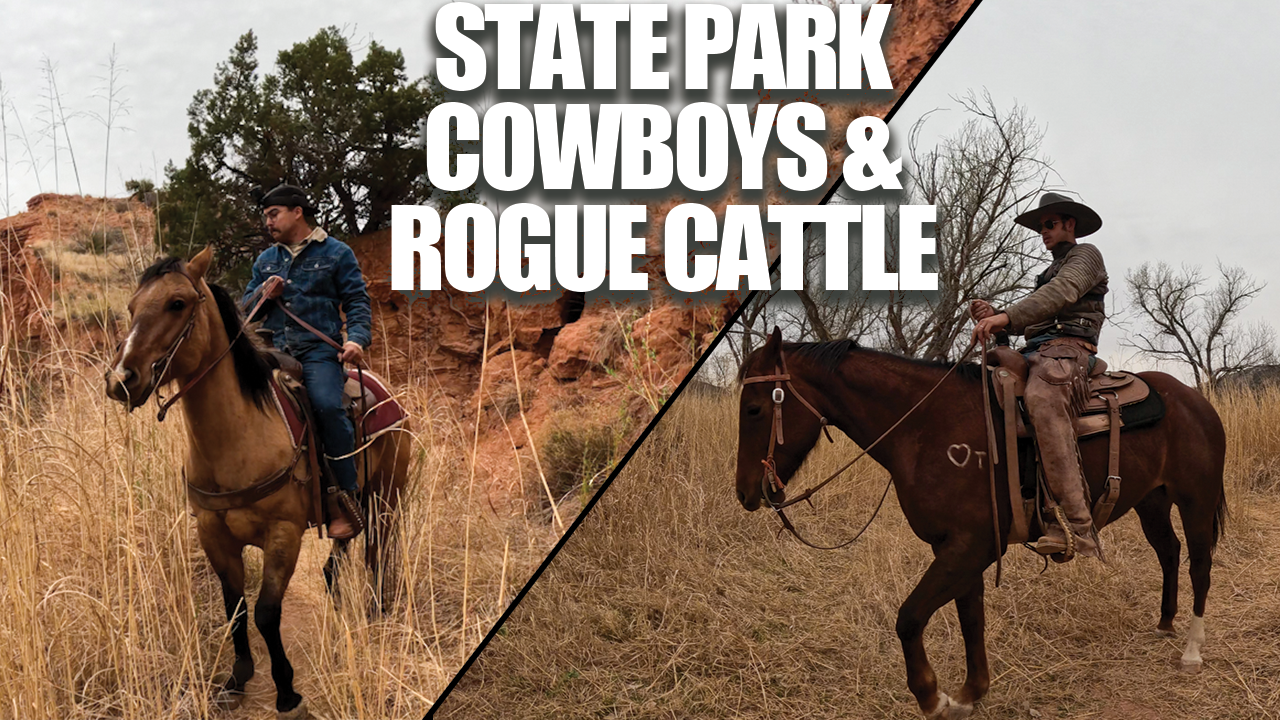
That’s when Aaron, Faith, and I got on horseback.
Now, I’ll be honest—I’m still earning my place in the saddle. I’m better than I was, but I’m no cowboy. And that country doesn’t make it easy.

Mesquite thorns everywhere. Cedar pollen blowing straight into your eyes. Dust, brush, branches snapping back at you. You’re pushing through tight, rough terrain the whole way. The horses handle it better than we do.
Then you’ve got creek crossings, steep climbs, loose rock—places where you don’t really have control. You’ve got to trust the horse.
At first, I didn’t.
But after a couple crossings, something clicks. You stop fighting it and start riding with it.

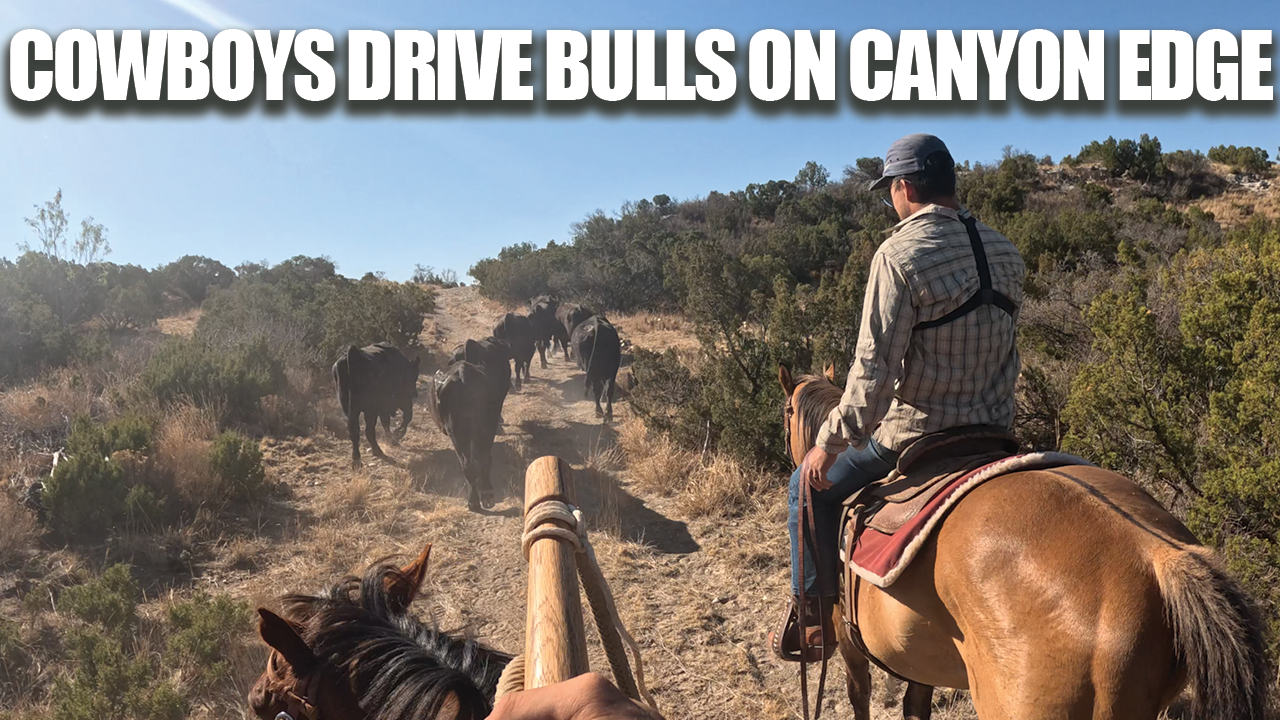
We worked our way through the canyon—up and down, across rocks, along bluffs—until we reached the cattle.
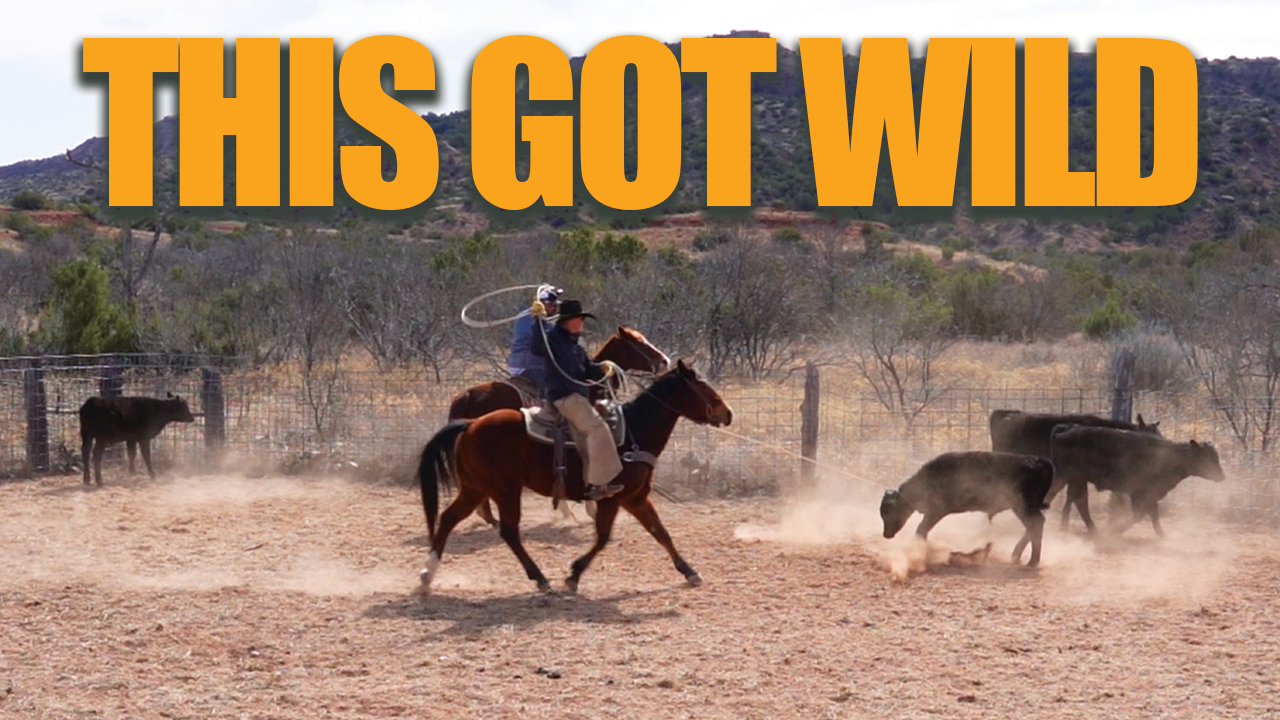
From there, it’s controlled chaos.
You don’t just “go get them.” You guide them. Pressure from behind, angles from the side, keeping them moving without scattering them. It’s not flat ground either—it’s rough country, which makes everything slower and more deliberate.

We pushed them up along the fence line, worked them down toward the gate, and finally got them through.
Found the break in the fence. Fixed it.
Job done.
By the time we rode back, we were whooped.
Dust-covered, scratched up, tired in that way you only get after a full day outside.
But there’s something about it.
You’re not staring at a screen. You’re not chasing emails. You’re solving real problems, with real stakes, on land that’s been worked for generations.
And that’s the part most folks never get to see.
If you haven’t yet, watch the video that goes with this. It’s a little wild, a little funny, and it shows a side of this life you won’t get anywhere else.
But more than anything—share it.
Because if people don’t understand what’s happening in agriculture, they won’t care when it’s gone.
And that’s not something we’re willing to let happen.

Leave a comment
All comments are moderated before being published.
This site is protected by hCaptcha and the hCaptcha Privacy Policy and Terms of Service apply.